
SEO title: EU Parcel Rules from 1 November 2026: €2 Handling Fee, Product IDs and H7's End
Meta description: The EU now charges €2 per declaration line on B2C parcels and requires product identifiers on every item. Zeyuan Logistics explains what the €3 duty plus €2 fee means for China–Europe shipping, and where DDP consolidation fits.
Suggested URL slug: /eu-parcel-rules-november-2026-e2-handling-fee-product-identifiers
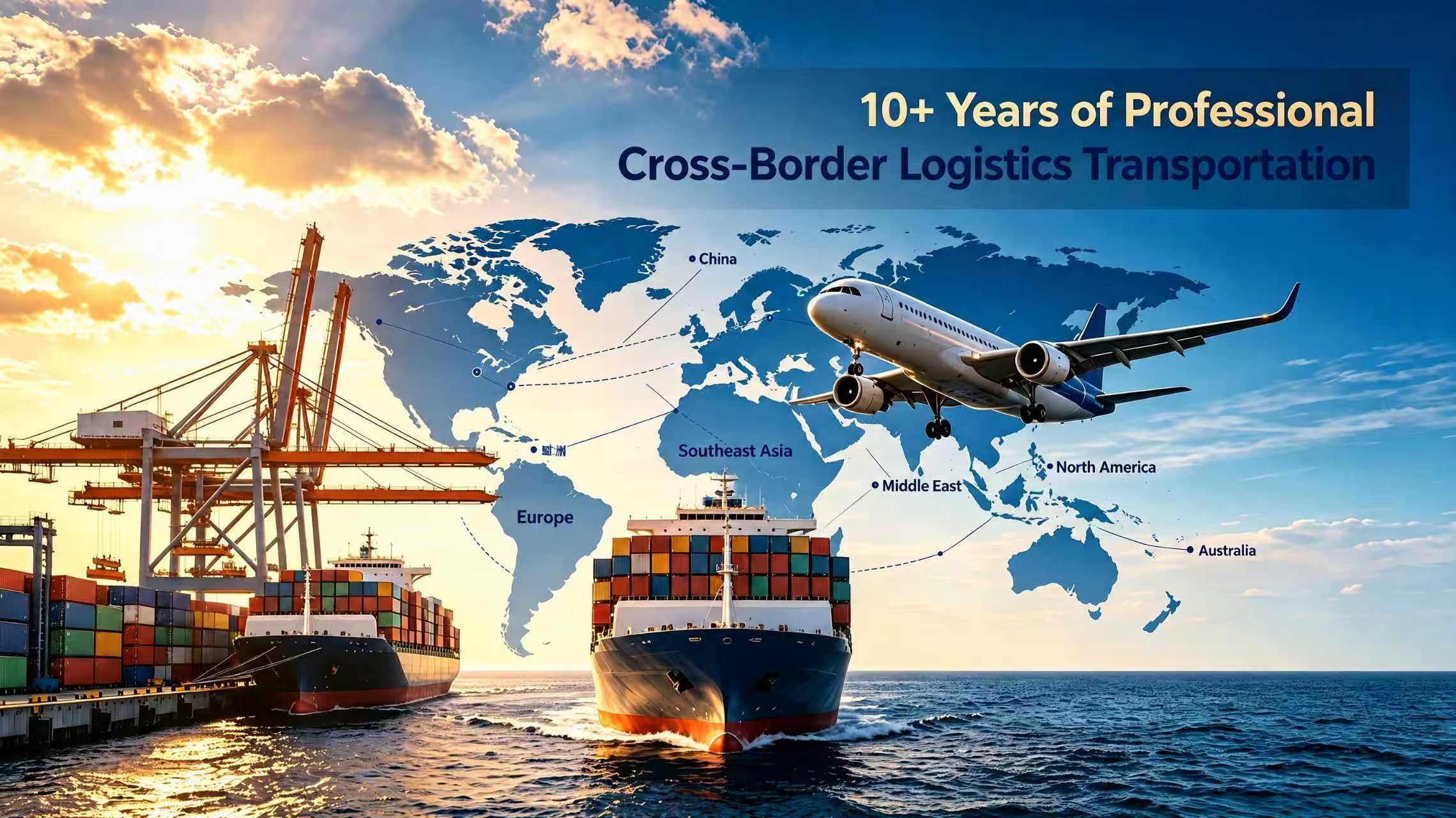
Zeyuan Logistics has moved freight between China and Europe since 2012 — express, air, sea and China–Europe rail, with customs clearance and DDP delivery to the door.
DONGGUAN, China — 4 November 2026 — Two new European Union customs obligations took effect on 1 November 2026, and together with a duty already in force since July they have redrawn the cost base of direct-to-consumer shipping from China to Europe.
The first is a €2 Union handling fee charged on every item sold to an EU consumer from outside the bloc. The second is a mandatory product identifier requirement on customs declarations for low-value B2C consignments. Both sit on top of the temporary €3 customs duty that has applied since 1 July 2026.
For a parcel containing three different product categories, the fixed charge is now €15 — before VAT is calculated on the goods and, under the Commission's guidance, on the fee itself.
The change is arithmetic for some sellers and existential for others. Zeyuan Logistics (Dongguan Zeyuan International Freight Forwarding Co., Ltd.), which has handled China–Europe DDP freight since 2012, says the dividing line is not order value but declaration structure.
The €2 fee is set by Commission Delegated Regulation (EU) 2026/2152, published in the Official Journal on 22 October 2026, and applies from 1 November. Its legal basis is Article 20(2) of the new Union Customs Code, Regulation (EU) 2026/2108.
The product identifier (PID) rule comes from Delegated Regulation (EU) 2026/1022. Identifiers were voluntary from 1 July 2026; from 1 November they are enforceable.
The third change is widely reported as part of the same package, but its legal date is earlier. Since 1 July 2026, the H7 super-reduced dataset has been reserved for consignments to private individuals without an EORI number, valued at no more than €150, free of excise goods and free of prohibitions and restrictions. Any B2B flow, at any value, must be declared under the full H1 dataset. An EORI number appearing on an H7 declaration causes that declaration to be rejected and re-filed as H1.
This is the detail that most landed-cost models get wrong.
The fee is assessed per declaration line — goods sharing the same tariff classification, description and origin. Identical products group into one line. Different products do not.
Parcel, value ≤ €150 |
Declaration lines |
€3 duty |
€2 fee |
Fixed cost |
5 identical phone cases |
1 |
€3 |
€2 |
€5 |
Phone case + charging cable |
2 |
€6 |
€4 |
€10 |
Three items, three categories |
3 |
€9 |
€6 |
€15 |
Figures exclude VAT. Four properties of the charge matter commercially:
No value ceiling.
Non-refundable.
No end date.
Inside the VAT base.
B2B consignments sit outside the fee, because a business-to-business import is not a distance sale. They are not cheaper for it: B2B loses the flat €3 and reverts to the Common Customs Tariff at full ten-digit granularity, plus the cost of H1 filing.
Every item in a B2C distance sale valued at €150 or less must now carry three identifiers:
M-PID (TARIC C127)
NS-PID (TARIC C128)
S-PID (TARIC C129)
Incomplete or inaccurate identifiers are treated as a failure to supply complete and accurate declaration data. The declaration can be rejected and the consignment held. Because one product record feeds every parcel containing that product, a single gap in a catalogue is replicated across an entire SKU's order flow rather than appearing as an isolated incident.
Two points in the Commission's guidance create avoidable failures. The manufacturer reference must come from the supplier — a merchant cannot generate it internally — and it must be declared at model or variant level. Reporting at batch or unit level, finer than required, can itself be treated as an infringement. The requirement applies to H1, H6 and H7 declarations alike, whether the seller uses IOSS, the special arrangements or standard import VAT procedures.
Guangdong's export economy is unusually exposed to the arithmetic. The Commission's customs reform documentation records 5.9 billion low-value items imported into the EU in 2025 — four times the 2022 figure — and states that more than 90% originated in China.
A €12 accessory shipped alone from Shenzhen to a Berlin address now carries a €2 fee plus a €3 duty, both non-refundable, plus VAT on the fee. That is a fixed cost of roughly 42% of the item price before any logistics, and it applies per category rather than per parcel. Split a single order across three categories and the fixed charge triples.
Zeyuan's operations team frames the consequence narrowly: the per-parcel model survives for high-value, single-category goods, and progressively fails for low-value baskets assembled from multiple categories — the exact profile of much consumer e-commerce.
The obvious response is to stop shipping parcels and start shipping pallets. Goods imported in bulk and released for free circulation under an H1 declaration are not distance sales, so neither the €2 fee nor the €3 duty applies per item; normal tariff rates apply instead, and if the product carries a low or zero MFN rate the saving can be substantial.
That trade-off is where Zeyuan's DDP door-to-door service, consolidation and warehousing and European railway transport meet the new rules. The company collects cargo at its Dongguan warehouse, consolidates, moves it by sea, rail or air, clears it and delivers to the consignee's door — the Bulgaria sea DDP case it published in September, 147 pieces and more than 40 CBM delivered to Sofia in 50 days, is the shape of that flow.
Devanning at the overseas warehouse. Cargo released under a single H1 declaration is no longer a distance sale — which removes the €2 fee and the €3 duty, and also removes IOSS.
Consolidation is not a loophole, and three constraints are worth stating plainly:
Stocking in Europe changes the VAT regime.
Customs warehouse storage is not a shelter.
Grouping parcels to cross €150 is detected.
The decision is therefore a duty-and-VAT question before it is a freight question — and it has to be modelled per SKU, not per average order.
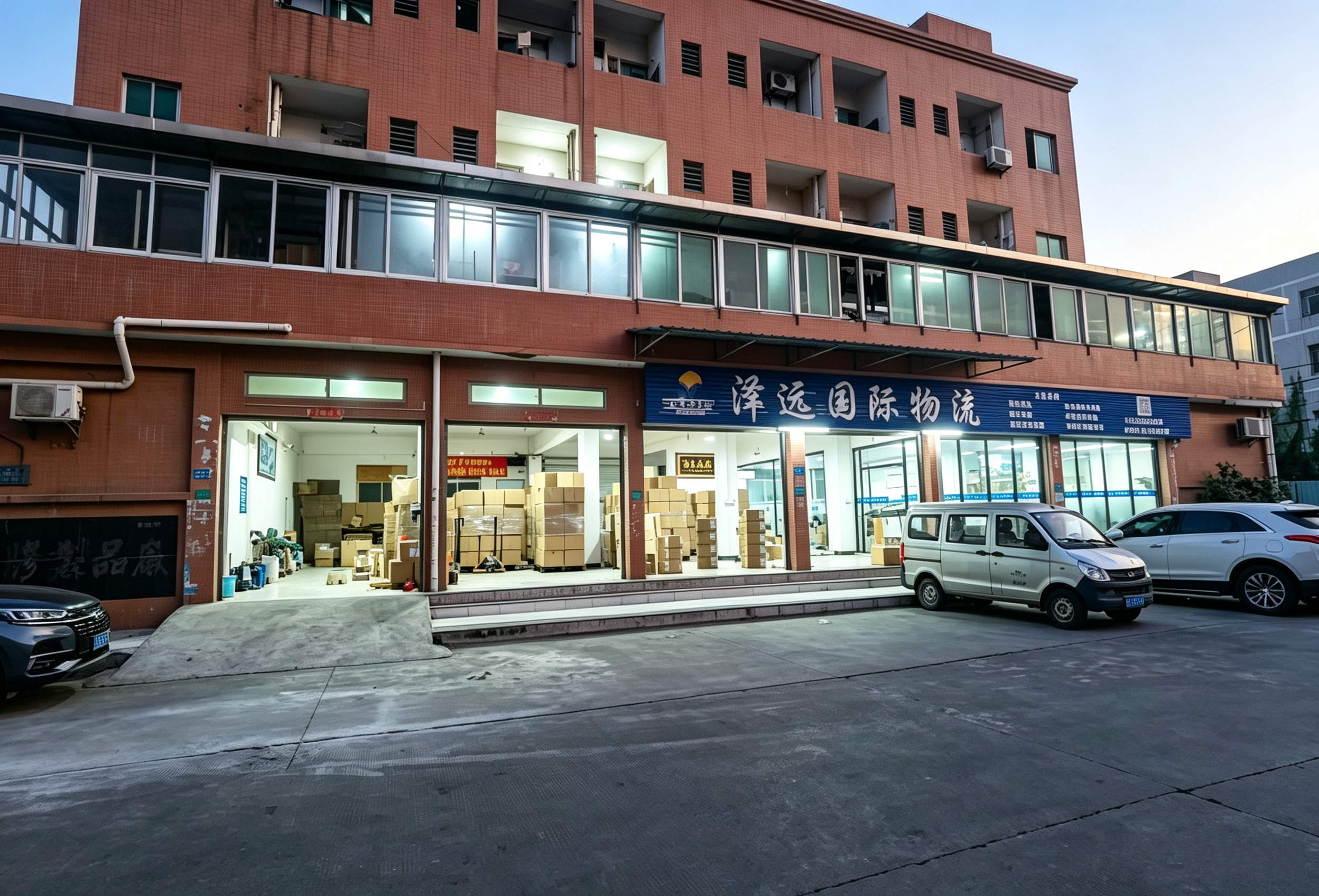
Zeyuan Logistics has handled international express, air, sea and rail freight, customs clearance and DDP delivery since 2012, with a network covering more than 200 countries and 500 Chinese cities. For the 1 November changes the company is focusing on four points of friction:
Line structure at booking.
Declaration data before dispatch.
Route selection per SKU.
Single-point accountability.
For sellers whose EU volumes justify a stock position, the company's FBA transport and express products cover the two ends of that decision. Shippers can request a landed-cost quote with their SKU list and destination countries.
Recount your declaration lines.
1. Landed-cost models built on average order value will misprice multi-category baskets.
Audit catalogue identifiers.
2. Merchant reference, model-level manufacturer reference, and a GTIN/EAN/UPC where one exists — per SKU.
Test the data pipe.
3. PIDs must travel electronically with each declaration line through platform, shipping software and carrier. A supplier spreadsheet satisfies no customs authority.
Decide collection at checkout.
4. The fee is VATable and non-refundable; collecting it at the door produces refused parcels, chargebacks and disputed reviews.
Re-model returns.
5. A non-refundable €2 per line changes the economics of high-return categories, apparel above all.
Separate EU from UK.
6. These rules are EU law; shipments to Great Britain are outside their scope and follow a different regime.
Date |
Change |
1 July 2026 |
€150 duty relief abolished; €3 temporary duty per item; H7 restricted to B2C ≤ €150; PIDs voluntary |
20 September 2026 |
New Union Customs Code, Regulation (EU) 2026/2108, enters into force |
22 October 2026 |
Delegated Regulation (EU) 2026/2152 published, fixing the fee at €2 |
1 November 2026 |
€2 Union handling fee applies; PIDs mandatory for B2C ≤ €150 |
21 September 2027 |
New Code applies generally; "importer for distance sales" role takes effect |
1 July 2028 |
€3 duty ends, normal tariff at all values; lower warehouse fee; Customs Data Hub mandatory |
Founded in 2012 and headquartered in Dongguan, Guangdong, Zeyuan Logistics is a China-based international freight forwarder providing express, air, sea and China–Europe rail transport, consolidation and warehousing, customs clearance, and DDP door-to-door delivery to the UK and Europe. The company holds a first-class freight forwarding qualification and operates a network covering more than 200 countries and 500 Chinese cities, with dedicated account management on every shipment.
Zeyuan's Dongguan consolidation warehouse, where export cargo is received, checked, packed and loaded before the rail or sea leg.
Media contact: [Name], [Title] — [email] — [phone]
Notes to editors: Figures are drawn from Commission Delegated Regulation (EU) 2026/2152, Council Regulation (EU) 2026/382, Delegated Regulation (EU) 2026/1022, Regulation (EU) 2026/2108 and DG TAXUD's guidance for member states and trade dated 5 October 2026. The guidance is explanatory and not legally binding. This article is general information, not legal or customs advice; shippers should confirm treatment with their customs representative.



 EN